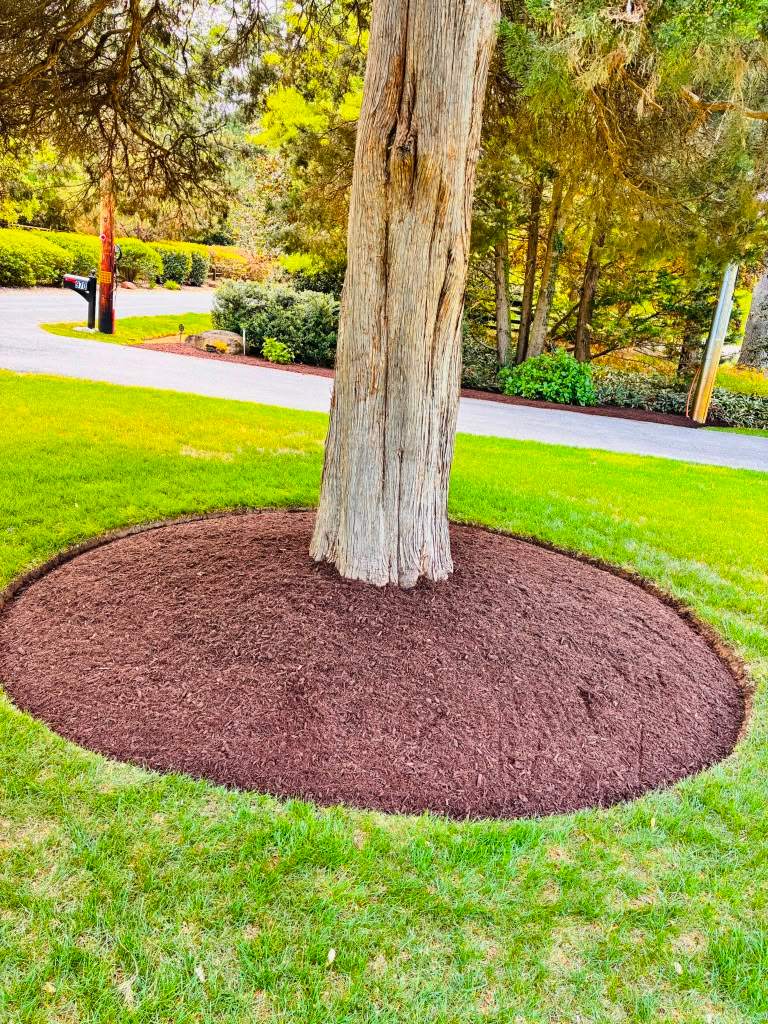
Fresh mulch does more for how a property reads from the street than almost anything else you can buy for the money. A bed that was invisible in the spring suddenly has a shape, an edge and a colour behind the planting. But mulch is not only decoration — it holds moisture in through summer, keeps the soil temperature steady, and stops most weed seed from ever seeing the light it needs to germinate.
Depth is where people go wrong in both directions. Too thin, at an inch or less, and it neither suppresses weeds nor holds water; you get the colour for a month and the weeds back by midsummer. Too thick, past four inches or so, and water struggles to get through to the roots at all, so the bed dries out underneath while looking perfectly mulched on top. Two to three inches is the range that actually works.
The mistake that does real damage is piling mulch against the base of a trunk or stem — the volcano you see heaped around street trees everywhere. Bark is not built to sit permanently wet. Held against a trunk it stays damp, softens, and invites rot and pests at precisely the point the tree can least afford it. Mulch should stop a few inches short of the trunk and leave the flare visible.
Once a year is plenty for most beds, ideally in spring once the soil has warmed. And the edge matters as much as the material: a clean spade-cut edge where the bed meets the lawn is what makes the difference between a bed that looks maintained and one that looks like it is spreading.
Beds looking tired? Call Floy'd Landscaping at (732) 532-9884 — we will measure it up and quote the material and the labour separately, free of charge.
Ready to Get Started?
Let Floy'd Landscaping handle it. Get your free estimate today — no obligation.